
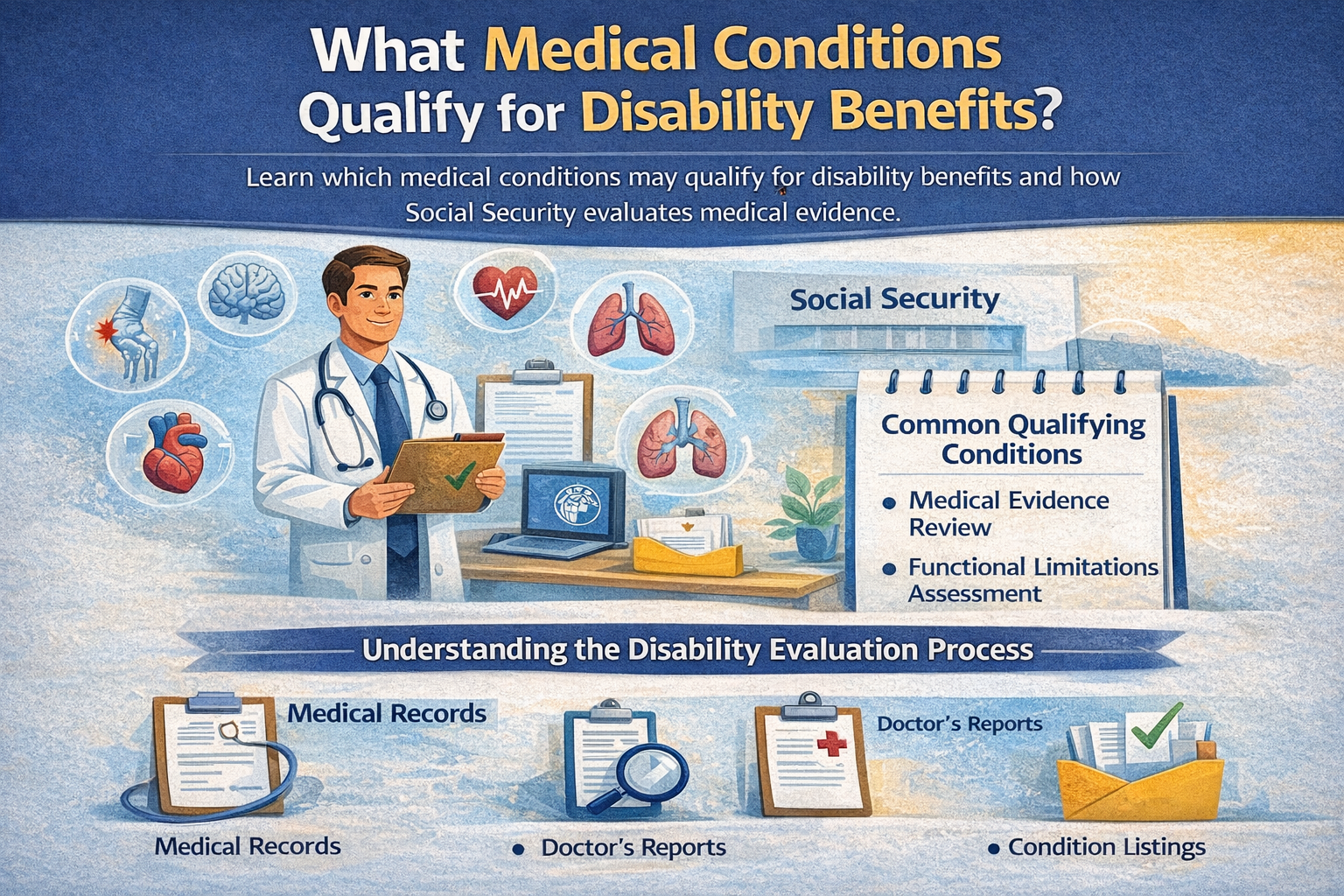
What Medical Conditions Qualify for Disability Benefits?
This is one of the most common questions in disability:
What conditions qualify?
And the frustrating answer is:
There isn’t one simple list that guarantees approval.
Social Security does have medical listings, but qualifying is about more than just having a diagnosis.
This guide is part of our Eligibility & Medical Conditions section, where we explain who may qualify for disability benefits and how disability decisions are made.
The diagnosis matters — but it’s not everything
Social Security does look at your medical condition.
But they also look at:
- Severity
- Duration
- Treatment history
- Functional limitations
That last part matters a lot.
What Social Security is really evaluating
They are not just asking, “What do you have?”
They are asking:
- What does this condition stop you from doing?
- Can you work consistently?
- Can you function at a substantial level?
This is why two people with the same condition can get very different outcomes.
The role of medical evidence
Medical evidence is what gives your claim weight.
That includes:
- Doctor notes
- Imaging
- Lab results
- Specialist records
- Ongoing treatment history
The stronger the documentation, the clearer the case.
Why people get confused here
Many people assume serious-sounding conditions should automatically qualify.
But Social Security focuses on function, not just diagnosis names.
That’s why medical conditions and eligibility have to be discussed together.
Final Thoughts
Medical conditions can qualify for disability benefits, but approval depends on more than the diagnosis itself.
The real question is whether your condition is documented well enough to show that you cannot sustain substantial work.
