SSDI vs SSI: What’s the Difference?
This is one of the first big confusion points in disability.
People hear SSDI and SSI and think they’re basically the same thing.
They’re not.
They both involve disability benefits, but they work very differently.
This guide is part of our Disability Basics section, where we explain how disability benefits work and how the system is structured.
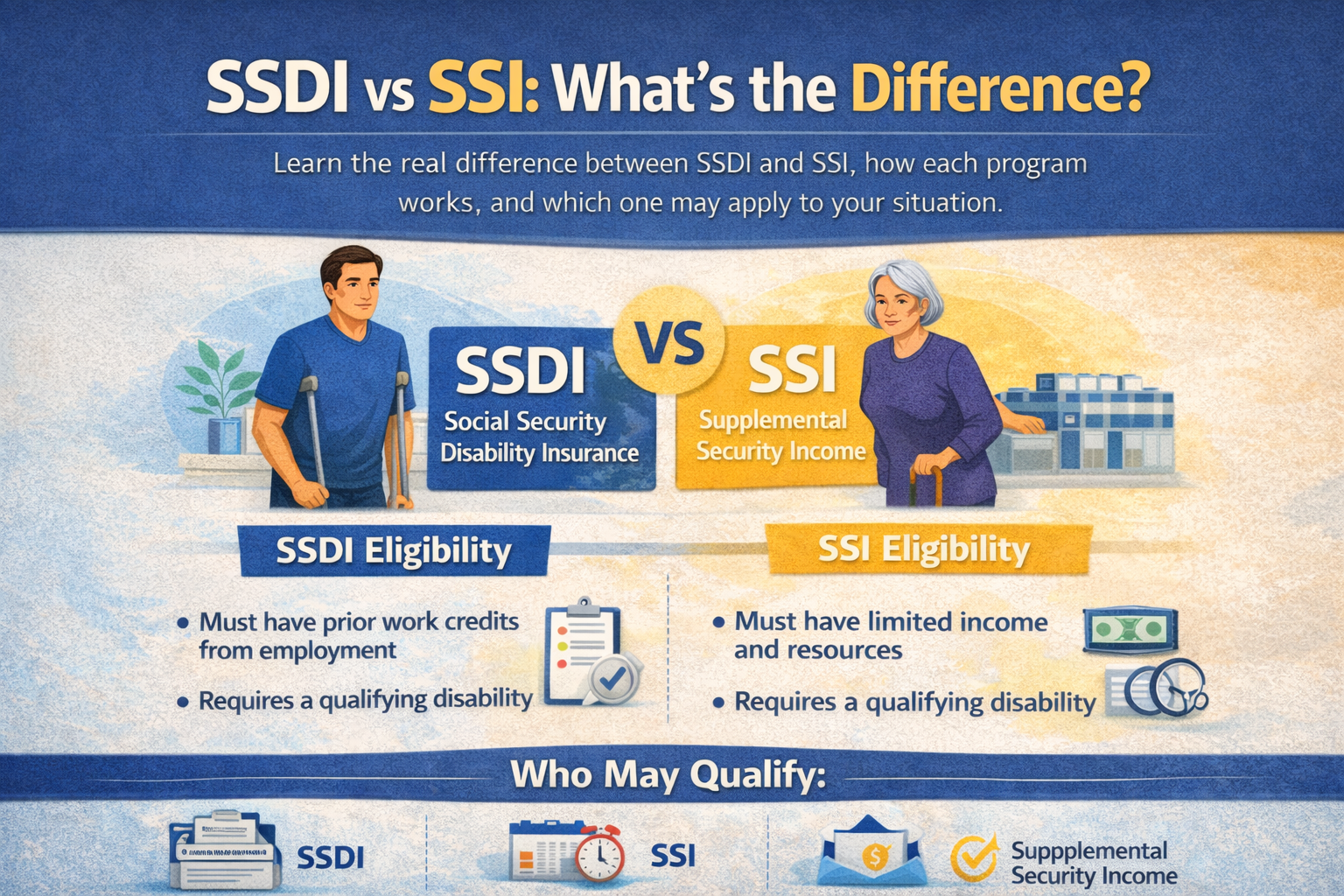
SSDI is based on work history
SSDI stands for Social Security Disability Insurance.
This program is based on your work history and the Social Security taxes you paid while working.
In simple terms, SSDI is tied to whether you worked enough and recently enough to qualify.
SSI is based on financial need
SSI stands for Supplemental Security Income.
This program is for people who are disabled and meet strict income and resource limits.
You do not need a work history to potentially qualify for SSI.
That’s one of the biggest differences.
What they have in common
Both programs:
- Use the same disability standard
- Require medical proof
- Look at whether you can work consistently
So medically, the evaluation is similar.
Financially and technically, they are very different.
Why the distinction matters
If you don’t understand which program applies to you, you can end up confused about:
- work credits
- income limits
- resource limits
- payment expectations
And that confusion can slow down the process.
Final Thoughts
SSDI and SSI are both disability programs, but they are not interchangeable.
Understanding the difference early helps you set better expectations and avoid unnecessary confusion when applying.
