
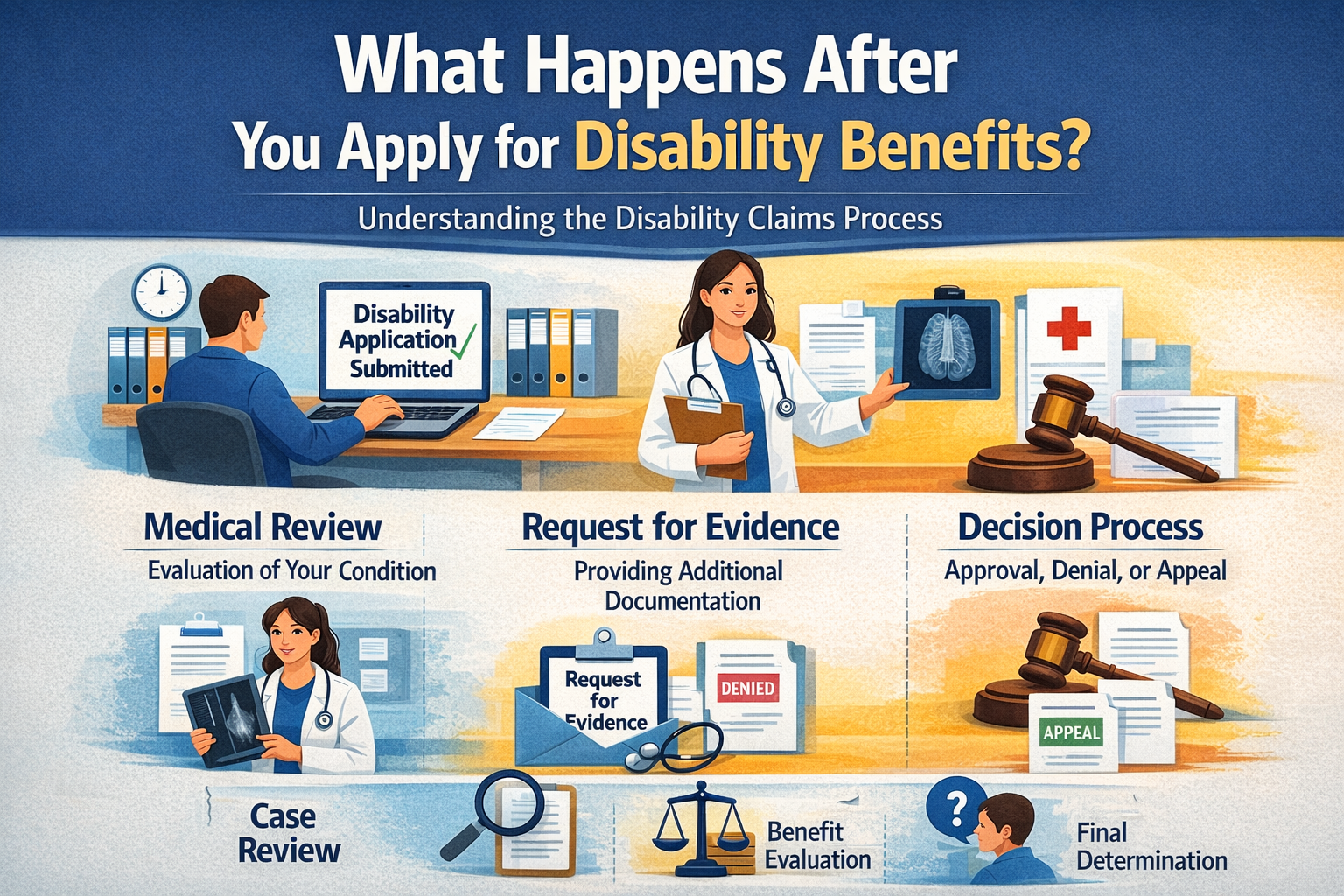
What Happens After You Apply for Disability Benefits?
A lot of people think applying is the hard part.
Then they submit their application and realize the next phase is even harder in a different way:
waiting without really knowing what’s going on.
If that sounds familiar, you’re not alone.
This guide is part of our Applications & Forms section, where we explain how to apply for disability benefits and what to expect throughout the process.
Step 1: Your claim gets reviewed for basic eligibility
The first thing Social Security looks at is whether you meet the non-medical rules for the program you applied for.
That may include:
- Work credits for SSDI
- Income and asset limits for SSI
- Basic technical eligibility requirements
If something doesn’t line up here, your claim can be denied before the medical review even really gets going.
Step 2: Your case moves into medical review
Once the basic screening is done, your file is usually sent to Disability Determination Services.
This is the stage where they begin looking at:
- Your diagnoses
- Medical treatment history
- Test results
- Doctor notes
- Functional limitations
This is also the stage where many delays happen, because your records have to be gathered and reviewed.
Step 3: You may be asked for more information
This part catches a lot of people off guard.
After you apply, Social Security may send:
- Function reports
- Work history forms
- Requests for clarification
- Notices for consultative exams
This does not automatically mean your case is in trouble.
It often just means they need a fuller picture.
Step 4: They compare your condition to their rules
Social Security is not just asking whether you are sick.
They are asking whether your condition prevents you from doing substantial work on a consistent basis.
That means they care about:
- Physical limitations
- Mental limitations
- Reliability
- Endurance
- Ability to function over time
This is one reason strong documentation matters so much.
Step 5: A decision is made
Once the evidence is reviewed, you’ll get a decision.
That decision will usually be either:
- Approved
- Denied
And yes, plenty of first-time claims are denied.
That’s why it helps to understand why disability claims get denied before you assume a denial means the end of the road.
Why this stage feels so confusing
The process after applying feels vague because a lot happens behind the scenes.
You don’t see the file moving.
You don’t see which records arrived.
You don’t see what the reviewer is thinking.
So the silence feels bigger than it really is.
Final Thoughts
After you apply, your case moves through a real process — even if it feels invisible from the outside.
The best thing you can do is stay responsive, keep treating consistently, and understand that the waiting period is part of how disability claims are built and evaluated.
